Jonas Höschl
14.03.–19.04.25
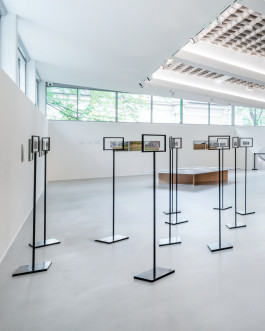
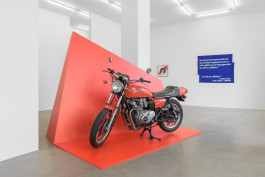
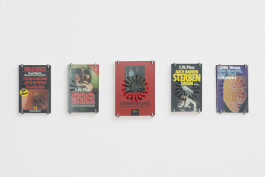
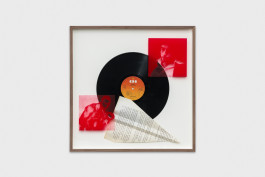
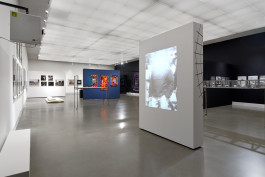
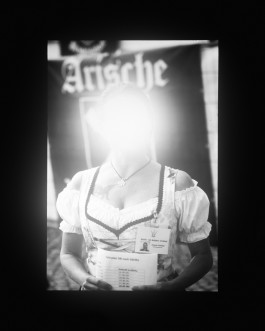
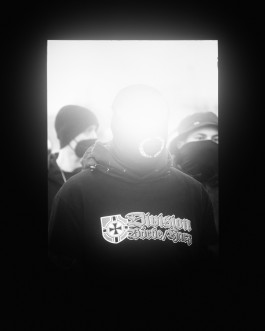
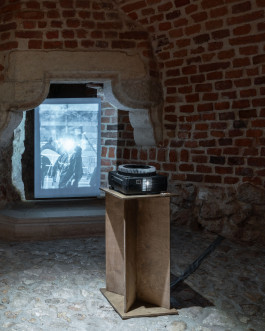
Jonas Höschl examines the identity-forming potential of political systems. Drawing on regional political scandals and European conflicts, he highlights the alienation from unifying ideals. Höschl appropriates the sometimes historical visual languages of ideologies with differing orientations to expose propagandistic manipulation. Through recontextualization, he draws attention to the referentiality of historical documents.
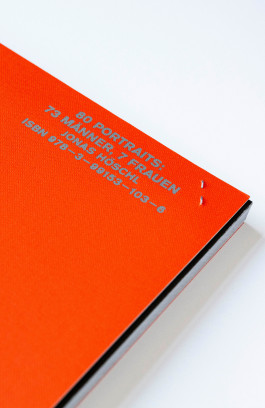
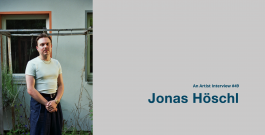
Jonas Höschl (*1995 in Regensburg, Germany; lives and works in Vienna) studied fine art and sculpture at the Academy of Fine Art Munich as a Meisterschüler of Olaf Nicolai and was awarded the 2024 Debutant Grant 2024. Höschl was awarded numerous grants and prizes, among them the Cultural Education Grant 2025, Munich and the Paula Modersohn-Becker Art Prize 2024. Most recently, his publication 80 Portraits: 73 Männer, 7 Frauen (Verlag für moderne Kunst) was awarded with the German Photobook Award 25/26 – Gold Medal, Category “Artistic Photography Photobook”. Höschl‘s work has been presented at Lothringer13 Halle, Munich, Neuer Kunstverein Regensburg, Kunstmuseum Heidenheim, Galerie Kandlhofer, Kunsthalle Gießen, Worpsweder Museen and Galleria Nazionale d‘Arte Moderna, Rome.


Latest external exhibitions ລ
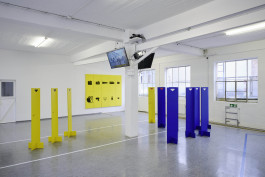
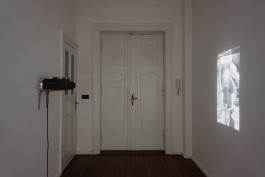
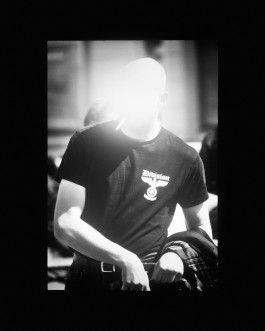
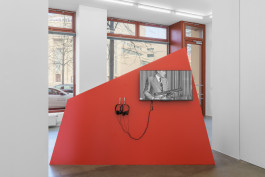
At the center if the installation, two screens present the point-of-view footage of the attacked photographer. The spacial arrangement places viewers in a constant shift between the perspective of a victim and that of a neutral observer, raising questions about the authenticity and contextualization of documentary images.
What societal, political, and media mechanisms make violence visible or invisible? How is violence documented, instrumentalized, or censored? What creative and artistic approaches can render violence perceptible? How do artists employ strategies such as alienation, censorship, documentation, or spectacularization to depict or obscure violence?
Exhibitions at AJ ⁞
14.03. – 19.04.25
How does one process and face history without falling into obsolete and dated narratives beyond glorification and posthumous instrumentalization?
Jonas Höschl
14.03.–19.04.25
Jonas Höschl examines the identity-forming potential of political systems. Drawing on regional political scandals and European conflicts, he highlights the alienation from unifying ideals. Höschl appropriates the sometimes historical visual languages of ideologies with differing orientations to expose propagandistic manipulation. Through recontextualization, he draws attention to the referentiality of historical documents.
Jonas Höschl (*1995 in Regensburg, Germany; lives and works in Vienna) studied fine art and sculpture at the Academy of Fine Art Munich as a Meisterschüler of Olaf Nicolai and was awarded the 2024 Debutant Grant 2024. Höschl was awarded numerous grants and prizes, among them the Cultural Education Grant 2025, Munich and the Paula Modersohn-Becker Art Prize 2024. Most recently, his publication 80 Portraits: 73 Männer, 7 Frauen (Verlag für moderne Kunst) was awarded with the German Photobook Award 25/26 – Gold Medal, Category “Artistic Photography Photobook”. Höschl‘s work has been presented at Lothringer13 Halle, Munich, Neuer Kunstverein Regensburg, Kunstmuseum Heidenheim, Galerie Kandlhofer, Kunsthalle Gießen, Worpsweder Museen and Galleria Nazionale d‘Arte Moderna, Rome.


Latest external exhibitions ລ
At the center if the installation, two screens present the point-of-view footage of the attacked photographer. The spacial arrangement places viewers in a constant shift between the perspective of a victim and that of a neutral observer, raising questions about the authenticity and contextualization of documentary images.
What societal, political, and media mechanisms make violence visible or invisible? How is violence documented, instrumentalized, or censored? What creative and artistic approaches can render violence perceptible? How do artists employ strategies such as alienation, censorship, documentation, or spectacularization to depict or obscure violence?
Exhibitions at AJ ⁞
14.03. – 19.04.25
How does one process and face history without falling into obsolete and dated narratives beyond glorification and posthumous instrumentalization?